



The governing body has updated next year’s technical rules to prevent teams from placing aerodynamic bodywork around the exhaust tailpipe, ending a development path first exploited by Ferrari on the SF-26.
The device appeared during pre-season testing in Bahrain and has remained legal throughout the 2026 season.
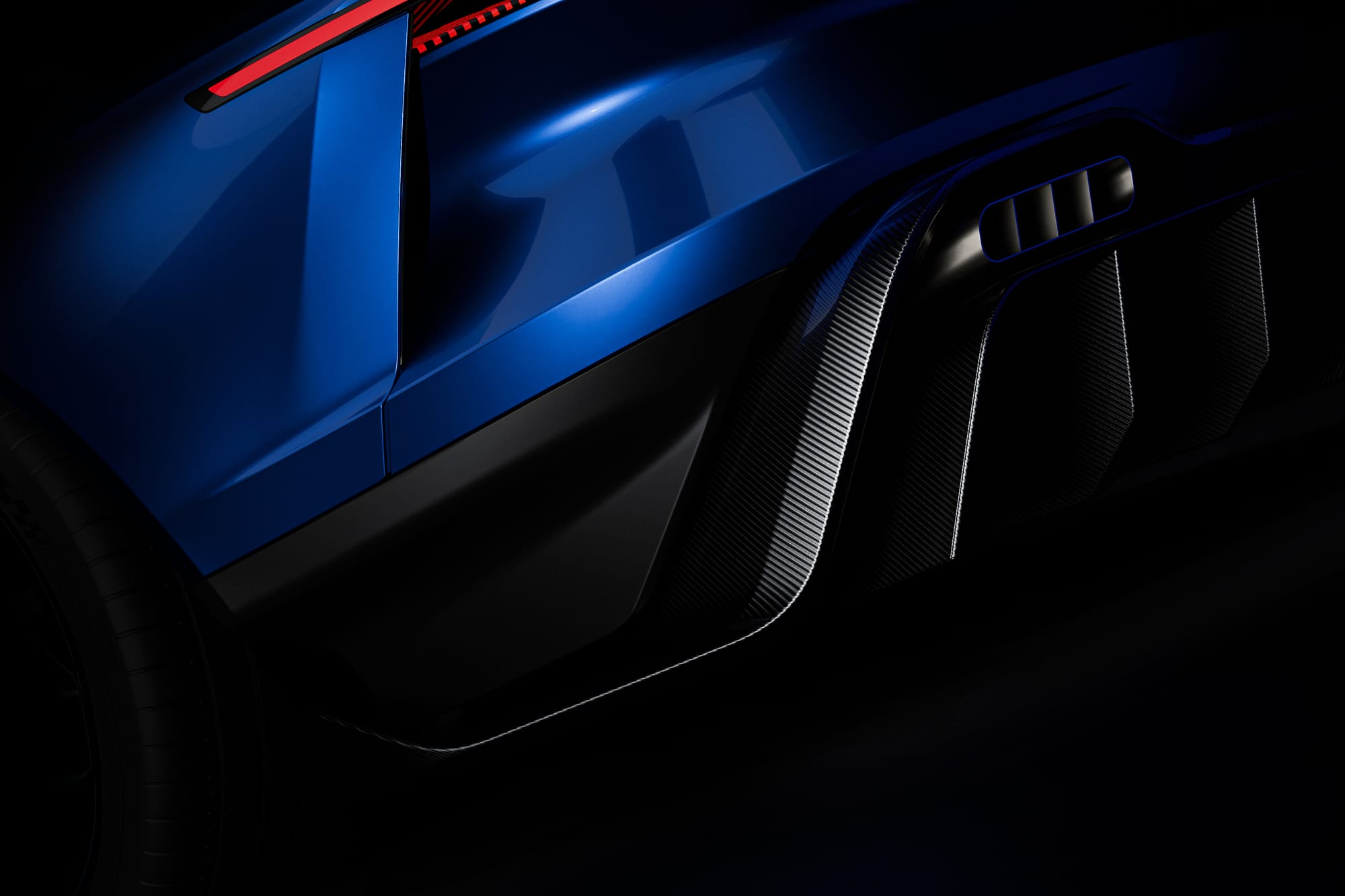
It gave Ferrari an extra aerodynamic tool at the rear of the car, with a small winglet positioned near the exhaust to help improve the airflow structure at the back of the car.
The solution was not a simple bolt-on item for rivals to copy, as Ferrari had designed the rear of the car with the concept in mind.
That included packaging decisions around the rear crash structure and differential, which helped create the space needed for the device.
While the FIA was satisfied the Ferrari design complied with the current rules, it has now acted to prevent the idea from becoming a wider development focus under the 2027 regulations.
Take the short survey.
The updated rules create a new exclusion zone around the exhaust, limiting what teams can place in the area surrounding the tailpipe.
Article C2.3.7 of the 2027 regulations states: “Except for tailpipe, no part of the car may lie within a right circular cylinder which intersects the planes XR = 385 and XDIF = 800, and whose axis is identical to, and diameter 20mm greater than, that of the right circular cylinder defined in C3.9.2(g).”
The FIA has also tightened the wording around tailpipe supports, closing the second route teams had used to pursue similar gains.
Mercedes, McLaren and Red Bull were among those to find their own versions of the idea during the season, using the allowance for exhaust support structures to create smaller aerodynamic devices.
Those designs were also legal, but the revised 2027 wording removes the scope for teams to continue in that direction.
It means Ferrari’s original solution, along with the rival interpretations that followed it, will be outlawed from next season.
The timing of the rule change comes as Ferrari continues to evaluate whether the device is worth running at every circuit this year.
During opening practice for the Austrian Grand Prix, Lewis Hamilton ran with the exhaust wing fitted to his Ferrari, while Dino Beganovic’s car was used for comparison work during his FP1 appearance in place of Charles Leclerc.
Beganovic was seen running without the device as Ferrari gathered data on the alternative configuration.
The exhaust wing clampdown forms part of a broader clean-up of the 2027 technical regulations.
Other changes approved by the FIA include tighter controls around floor body stays, their interaction with sidepod bodywork, and further limits on suspension and damper behaviour.





















Discussion about this post