


The growth of Formula 1 in recent years has largely been credited to the Netflix Drive to Survive series, but that is an oversimplification.
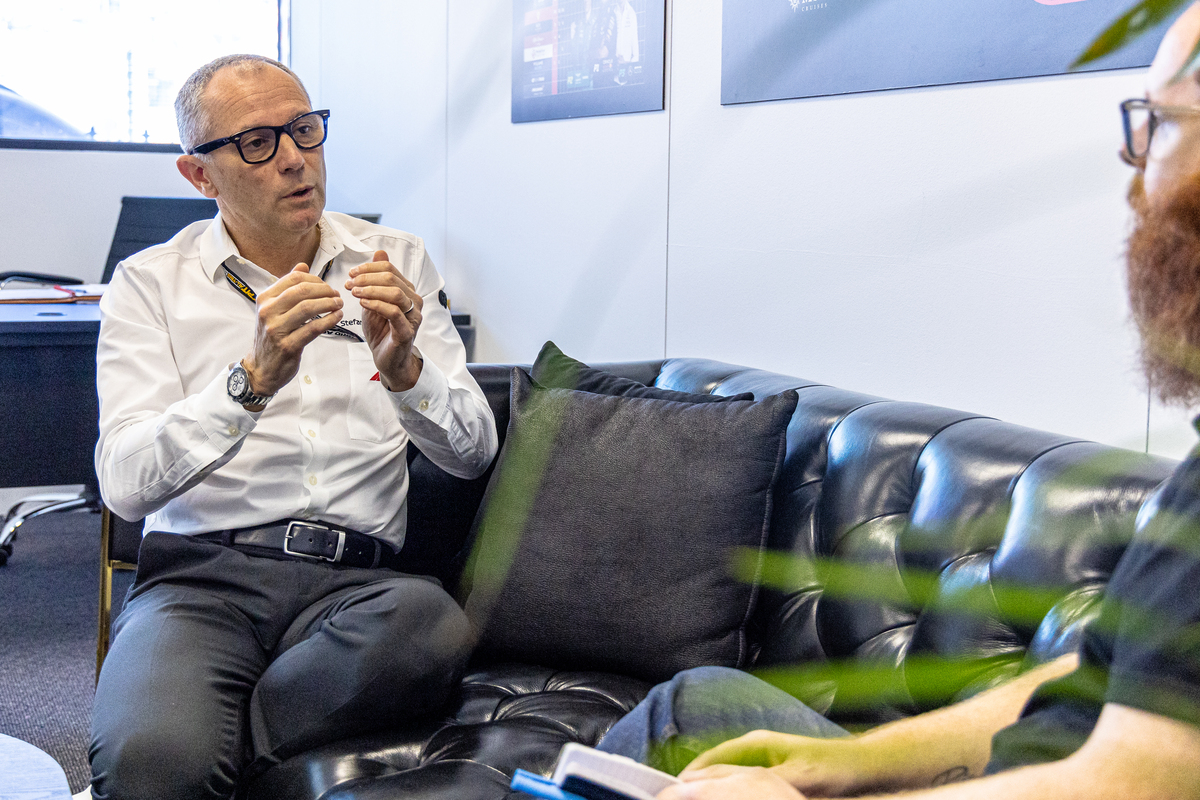
Stefano Domenicali, Formula 1 CEO and president, acknowledges the part the series has played in reaching new fans but believes it is just part of a broader and very deliberate growth strategy.
Today, the sport enjoys a younger audience than at any time in its recent history with a host of new fans finding it for the first time.
A large portion of them is based in the United States, a market that has been notoriously difficult for the Euro-centric F1 business to crack.
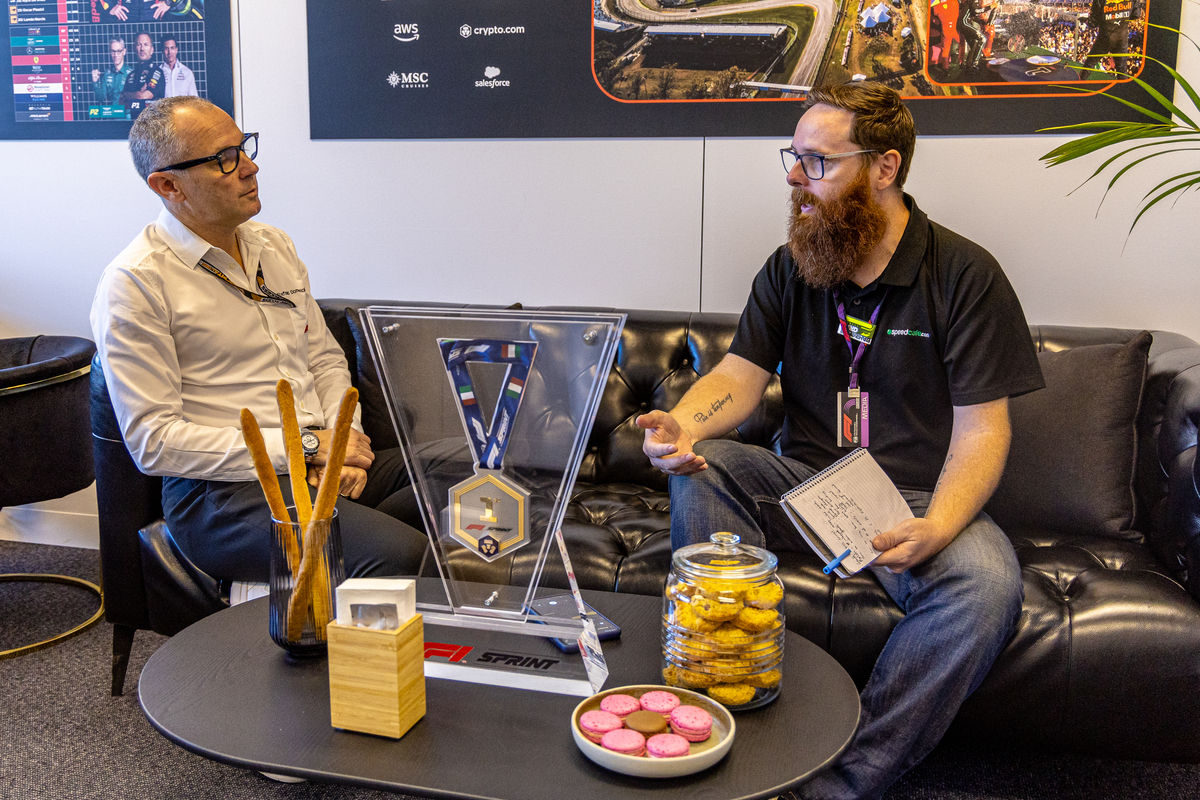
Speaking exclusively with Speedcafe, Domenicali suggested there were three ‘dimensions’ driving the sport’s growth.
“It’s more than that,” he said of the Netflix theory.
“For sure, we had to tackle how to connect and stay connected to fans – fans are the centre of our relationship, there’s no discussion.
“Fans are old fans, avid fans, traditional fans. And if you just focus on them, of course, we’re losing a lot of other opportunities.
“So, what we did, in terms of strategy, (was to look at) how we could adapt and also attract new fans that were not really interested in our sport, of course, and with a traditional way of connecting and speaking would have been impossible.
“So, we worked very hard on social media platforms, activation, connectivity with the drivers and the teams.”
F1 now knows how to use social media
Formula 1 has adopted an all-new approach in how it embraces and uses social media in recent years.
Teams and drivers have greater freedom under Liberty Media’s ownership which has created a vibrant community.
That has welcomed in a range of new people, drawn in by memes, analysis, live updates, and banter.
But it is not limited to the likes of Twitter, Instagram, Facebook, TikTok, and others.
It also includes coverage that takes fans beyond a race weekend, offering a peek behind the usually tightly drawn curtains of the sport.
“Netflix for sure, it’s another way of speaking about Formula 1 and trying to focus not only on the sport’s details of what is Formula 1, into the specific racing, but talk about Formula 1 as a bigger event, the spectacular show, and something that can attract attention,” said Domenicali.
The attention of the world is negative, however, if the product is not one it is interested in.
As a result, Domenicali, Chase Carey before him, and the team they lead and have led have worked to make the sport more appealing to the watching world.
It is an unenviable task that requires balancing the commercial needs of Liberty Media with those of the teams, the wants of existing fans, and those of potential new ones, all while respecting the history of the sport.
A business is only as strong as its weakest link, however, and both Carey and Domenicali quickly realised the importance of stability and sustainability of the teams.
Throughout the sport’s history, teams have collapsed with frightening regularity – as the money dries up, teams collapse.
Before Haas, the three most recent additions to the grid all came and went within a decade, all folding due to lack of funding.
Even those who have battled on have struggled; Williams team boss James Vowles has suggested his team simply survived for the last 15 years, without the investment it needed to be competitive.
Where once it was a wild west, there are now financial regulations, limiting what teams can spend.
F1 takes on transformation
Almost overnight, their value increased, with the likes of Zak Brown suggesting a franchise, as F1 effectively now operates, will soon push $1 billion.
Add in new technical regulations with simplifications in some areas and further restrictions in others, and the teams, and thereby the sport, are in a healthy position.
“And this has been and will be another important part of the equation,” Domenicali noted.
“And third, how we can use our platform to talk about not only sporting events but also about values that are bigger than Formula 1.
“You know, talking about the diversity, about sustainability, our platform with regard to sustainable fuel, so all these kinds of things.
“If you put together and mix up all the things, I believe that’s the reason why, in the last couple of years, we were able to transform the world of Formula 1 into the world we’re living today.”
That saw 444,000 fans pack into Albert Park last weekend, a record crowd across both the event and the sport’s history – toppling Austin last year which saw 440,000 people attend.
Domenicali reveals turning point
But there is an elephant in the room, which is ironically the one the F1 world retreated to following the announcement the 2020 Australian Grand Prix was cancelled.
The sport’s ability to get started during the coronavirus pandemic gave it access to a world filled with people with little to do but watch television.
That predates Domenicali’s reign in F1, but together with its new-found openness, presence of Netflix, and strategies to improve financial security, has played a tremendous role in the sport’s current success.
“That could be really the game over,” Domenicali admitted of the pandemic’s impact on F1.
“We were in a situation where financially, we lost a lot of money because, of course, we couldn’t have people, we couldn’t go racing, we had to move this first season of COVID later on, fewer races and so on.
“But as always, when there is a problem, there is a big opportunity and I have to say thanks to the vision, our shareholders and Chase, I think there was a moment where we invested in Formula 1.
“We were able to create the protocol and the procedure to go around the world.
“We kept the system alive in the worst moment ever.
“That was a moment where we put the foundation for the growth that we had as soon as the COVID was lifted in terms of pressure and but that was really the turning moment of our success.”





























Discussion about this post