
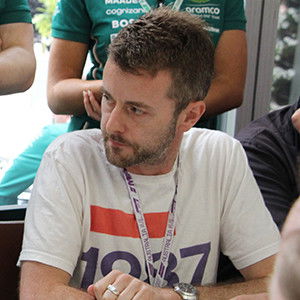

Bianchi died on July 17, 2015, at the age of 25 from injuries sustained during the 2014 Japanese Grand Prix, where he crashed into a recovery vehicle in wet conditions.
He suffered a traumatic brain injury and remained in a coma for nine months before passing away. His death marked Formula 1’s first driver fatality from a race incident in two decades.
Marking the anniversary with a heartfelt tribute on F1.com, Leclerc spoke about how Bianchi shaped him both on and off the track.
“Jules was the most competitive person I’ve ever met and I feel like I have that competitiveness in me because of Jules,” Leclerc said.
“When we were doing some races in karting, there was that competitiveness but also in the most stupid things we did at home, there was exactly the same competitiveness. He would get so frustrated when he lost anything.
“He would never, ever give up and he would work so hard in order to get better at something. Anything he would do, he would give the absolute maximum.”
View this post on Instagram
The pair’s families were closely connected in Monaco, with Bianchi a close friend of Leclerc’s older brother Lorenzo, and serving as both mentor and godfather to Leclerc during his early karting years.
Despite an eight-year age difference, Leclerc said they grew closer as he got older and began racing himself.
“We spent so much time together growing up and both of our families were and still are extremely close,” Leclerc added. “My older brother and him were best friends, so he was always around.
“I was six or seven and when you’re that age, you can definitely feel the age difference. Then growing up, the age difference just felt smaller in a way and we became close friends.”
Leclerc recalled memories of late-night karting sessions at a track managed by Bianchi’s father, and of the early admiration he had for his godfather’s commitment to improvement in every area.
“He was also very obsessive in a way that whenever he wasn’t good enough at something, you would see him one month, two months or three months later and he will have trained at every single opportunity he had,” he explained.
“I remember playing him at squash, for example. The first few times, he was already much better than me but then I remember like five or six months later, he had organised a tournament with one of the top 20 in the world.
“He was actually doing really well and that was very, very impressive because he had just trained every single day to get better at squash. This is a trait that I’ve always admired from Jules.”
Bianchi was a member of the Ferrari Driver Academy and widely regarded as a future Formula 1 star.
At the time of his crash, he was racing for Marussia and had scored the team’s first and only championship points at Monaco in 2014.
He had been lined up for a future drive with Ferrari before the incident at Suzuka ended his career.
In the years since, his legacy has remained a presence in the paddock. His race number, 17, was retired by the FIA, and his death led to the introduction of new safety measures in Formula 1, including the virtual safety car and the halo cockpit protection system.
Leclerc, who has raced with Ferrari since 2019, has regularly honoured Bianchi’s memory, including racing with a tribute helmet at Suzuka in 2024 designed in Bianchi’s colours and featuring the number 17.
“I hope Jules will be remembered as an extremely talented driver, who unfortunately never had the chance to be in a top team with a car that was helping him to show the extent of his talent,” he said.
“There are some people where you can see through their eyes, through their smile, how good of a person they are – and I think Jules is one of them.”




























Discussion about this post