

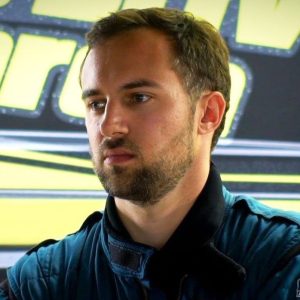

Brodie Kostecki and Thomas Randle were both absent from Sunday’s race after requiring medical attention in the wake of Saturday’s 200km encounter.
Kostecki, who was suffering from a virus and had a malfunctioning drink bottle during the race, elected to withdraw on Sunday morning.
Randle was medically ruled out after Sunday qualifying having battled through the previous day’s race without a working cool suit.
Supercars amended its heat policy ahead of Darwin, which now requires a working helmet air and cool suit, both cooling to 25 degrees or below.
Previously, only one of either the helmet air, cool suit or seat air had to be in operation, and only to “a temperature lower than the ambient temperature surrounding the car”.
Unchanged in the regulations is that the heat policy only kicks in if the local forecast at 8am predicts the day’s maximum to be above 32.9 degrees.
Secure your spot today.
Critically, Saturday’s predicted maximum was 32, which meant the heat rule did not apply – a threshold that some are now saying should be lowered.
“The 32.9 has been in our rules a long time,” Supercars’ motorsport boss Tim Edwards told Speedcafe.
“The changes were more about the conditions the cooling must get the driver to if you go over that.
“But up until 32.9 it’s not even compulsory to use the cool suit.
“You never like to see what happened this weekend, so of course we’ll review it.
“But we’ve seen issues with cool suits not working on 18 degree ambient days and they’ve suffered.
“Driving these cars is physically demanding and cabin temperatures are high, even on an 18 degree day.
“It’s not as simple as just going ‘we’ll make it 30 now’, because that wouldn’t help on the 18 degree day as well.”

Cool suit failures have been an intermittent issue in the category for years but it’s unclear why this season has included a string of such problems.
The issue first reared its head at the Sydney season opener, where Broc Feeney, Will Brown and David Reynolds endured failures, while Brown again suffered at the relatively cool Taupo.
Although the 32.9 degree forecast threshold meant the heat rule wasn’t enacted across the Darwin weekend, Edwards said the new requirements still had a benefit.
“Thomas’ helmet air was working efficiently, his head was being kept cool, which was the whole idea of the rule change,” he said.
“If one of them fails at least you have to have both systems in your car, which was never a requirement before.
“Had we not made that change he may not of even had helmet air, because there wouldn’t have been the requirement.
“We’ve made a step forward by enforcing the helmet air.”

Edwards said the review will also look at whether a working drink system should become compulsory, although cautioned over-regulation.
“Some drivers don’t even drink during the race… and some drivers don’t like the helmet air, they feel it gives them brain freeze,” he said.
“You’ve got all these personal differences between the drivers. It’s not one size fits all.”
Edwards meanwhile affirmed that in the cases where the heat rule is enacted, cars not complying will be black flagged and pulled from the track.
“As with all these things, you go and have the conversation with the team to see, is it actually reading right?” he said.
“The default isn’t just to fire them into the pit lane, we don’t want to spoil someone’s race.
“However, if it isn’t doing its job, it would have been a black flag.”

















Discussion about this post