
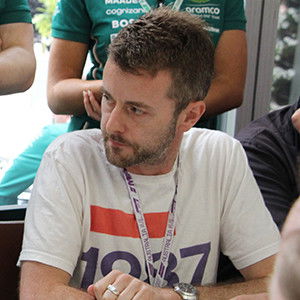

Speaking to F1.com ahead of his first race weekend as Audi’s new racing director in Miami, the Scot outlined the scale of the challenge facing the team in its debut F1 campaign while insisting the project was already exceeding expectations in some areas.
“From the power unit side of things, that’s the biggest, hardest job without doubt,” McNish said.
“Coming in for the first time there, there’s a lot of learning to be done.
“I don’t think we’re firing at our peak performance at the moment.
“We do have some work to do there, and we’re a little bit under in terms of performance.”
McNish stepped into the role last month following the departure of former team boss Jonathan Wheatley, taking charge of Audi’s race weekend operations while reporting to CEO and team principal Mattia Binotto.
Secure your spot today.
The 56-year-old has been heavily involved in Audi’s motorsport programs for more than two decades, including stints as a driver, Formula E team principal and senior advisor during the build-up to the brand’s F1 entry.
He said that long-standing connection made taking the role an easy decision.
“It’s not necessarily a job or a job description, it’s about being able to be part of something that pushes a program forward,” McNish said.
“It’s a part of my heart that’s in it. Ultimately, we’re here to try and win. We’re here to try and be successful.”
View this post on Instagram
Audi currently sits eighth in the constructors’ standings with two points, having shown flashes of promise alongside a string of operational and reliability issues in its opening races.
While McNish acknowledged the power unit was lagging behind rival manufacturers, he believed the chassis side of the operation had delivered a stronger-than-expected start.
“From the car point of view, I think they’ve done a very good job,” he said.
“Together I don’t know if many people were expecting us to be coming out of the blocks quite so strongly.”
McNish also pointed to the long-term nature of Audi’s project, comparing the process to endurance racing and warning against expecting immediate results.
“And what I know from my past racing experience, sports cars – Le Mans is a perfect example – it’s not always a sprint,” he said.
“Even though individual races are a sprint, a championship is about the endurance and the long-term vision of it.
“And there, I think we are building for the future pretty well.”
Audi’s board has reportedly given the project until 2030 to become a championship contender, with McNish stressing the importance of maintaining realistic expectations during the team’s formative years.
“We have to be realistic,” he said.
“We’re new kids on the block. We’re needing to learn quite a lot on and off the circuits, and so from that perspective, I think where we are at the moment is a very good start.”
McNish added that Audi’s short-term goal was to consistently challenge for Q3 appearances and points finishes as the team continues to refine its operations.
“We’d hope to be knocking on the door of Q3, knocking on the door consistently of points, but ultimately, we also know that that’s not always going to be possible,” he said.
“So, we have to just take it that this is year one of a long-term project and not to necessarily fixate just on the next race, but to also have that vision of where we’re going.”





















Discussion about this post