
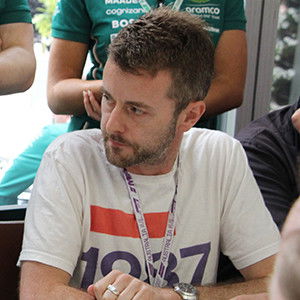

The proposed championship, known as HybridV10, is targeting a launch window of either 2028 or 2029 and would feature two single-seater categories.
At the top level, the series would showcase a hybrid V10 category, supported by a parallel hybrid V8 class.
While full technical regulations are still under development, the concept aims to blend sustainable hybrid technology with the sound and spectacle associated with Formula 1’s previous engine eras.
Up to 24 teams are planned across the two divisions, creating a potential grid of 48 race seats.
“HybridV10 is an independent global motorsport festival and racing series built around live, single-seater, competitive racing designed to restore emotion, innovation, and opportunity to the sport in a modern, open, and accessible way,” the series said in its launch statement.
Cost control and competitive parity sit at the centre of the proposal. All teams would start with the same technical foundation, pointing to a standardised chassis with tightly regulated development to limit costs while still allowing for manufacturer involvement.
View this post on Instagram
A dedicated HybridV10 campus and centre of excellence is also planned, featuring shared facilities such as simulators, engineering resources, driver training programmes and education pathways.
The project also outlines apprenticeships and employment opportunities aimed at developing talent across multiple areas of motorsport.
Driver selection would be overseen by a newly proposed governing body, the Hybrid World Commission, which would regulate licensing, sporting rules, stewarding and safety standards.
Entry into the series would be managed via a draft-style system, with drivers required to earn a bespoke ‘Hybrid Super Licence’.
To qualify for the top V10 category, drivers must be aged over 20 and have either finished in the top three of a major racing series, previously held an FIA F1 super licence, or served as an F1 reserve driver.
Additional licence points could be earned through simulator and testing performance, technical knowledge, fitness and professionalism, broadening the pathway beyond traditional funding-based models.
The series also plans to introduce a ‘Sim-to-Seat’ route, offering sim racers a potential pathway into real-world competition.
Race weekends would be run as three-day festival-style events, with Fridays focused on technology and education, Saturdays hosting the hybrid V8 races, and Sundays reserved for the headline V10 category.
A 12-round global calendar is planned, designed to rotate through major regions while also incorporating new and emerging motorsport markets.
Fan interaction would include a real-time integrity channel known as the “This Isn’t Right” mechanism, allowing supporters to raise concerns relating to sporting fairness, safety or procedural issues during events.
“This is an early-stage build, being developed deliberately and properly,” Hamilton said.
“More detail, including how people can be involved from the beginning, will be shared throughout January.
“I can build this alone, but I’d rather build it together with the fans and those who want to shape the future of a new motorsport platform.”
HybridV10 will spend 2026 engaging with prospective teams, manufacturers and partners before finalising its technical package, with on-track testing targeted for 2027 ahead of a potential series launch the following year.
























Discussion about this post