
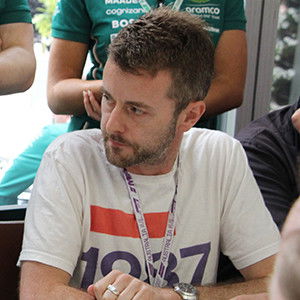

Although Max Verstappen finished only fifth after an opening-lap spin and a five-second penalty for crossing the pit exit line derailed his race, Red Bull left Miami encouraged by a significant step forward from its RB22 upgrade package and the resolution of a steering issue that had troubled the Dutchman since pre-season testing.
The improvement was most evident in qualifying, where Verstappen lined up on the front row for the first time in 2026.
Red Bull introduced revised sidepods, a new floor and its own version of the ‘Macarena’ rear wing concept in Miami, but Verstappen revealed another factor had played a major role in the turnaround.
“Most of it is in the steering system, where something was clearly wrong before,” he said.
“They have finally been able to fix that, so now I can at least steer normally again.”
Verstappen said he first raised concerns during the RB22’s Barcelona shakedown before the season began.
Buy tickets
“Well, I already said from the very first lap in the Barcelona test that something was wrong with the steering, but apparently it was very difficult to find.
“Now it’s finally been fixed.”
View this post on Instagram
Red Bull technical director Pierre Wache told Autosport the team replaced the complete steering rack and several supporting components during the break between races, with Verstappen immediately noticing the difference during a filming day at Silverstone ahead of Miami.
Wache admitted the team had struggled to isolate the issue in the opening rounds of the season.
“First, we had to make sure that he had an issue,” he said.
“Then it was about identifying where it was coming from, and that takes a long time.
And after that, it was about fixing the problem.
“I’m sorry that we didn’t fix it before. We tried multiple stuff and it didn’t work.”
Wache said the Miami package delivered what Red Bull expected, while the steering fix unlocked additional performance from Verstappen.
“It delivered what we expected,” he added.
“But after we fixed some other issues, that has also brought some Max performance that maybe we didn’t expect.”
The most visible element of the update was Red Bull’s rotating rear wing concept, which rotates 160 degrees in the opposite direction to Ferrari’s 270-degree design, and has been in development since November, according to Wache.
“We tried to introduce it in Bahrain, and then in Melbourne,” he said.
“We had some issues to make it work. We tried again in Suzuka, but we were struggling a lot. And now it works.
“It’s a long process to make this type of device happen.”
The breakthrough in Miami was particularly significant given McLaren and Ferrari also introduced substantial upgrades during the weekend, with Red Bull believed to have clawed back around a second compared to its deficit in Japan.
Verstappen said the progress delivered an important confidence boost after a difficult opening stretch to the season.
“Sometimes you need that,” he said.
“If you don’t get it right in the first few races, then have a month’s break and come back with a big upgrade package, you obviously hope it works. When it works well, it always gives confidence.
“It’s the same as when you’re playing football and suddenly start scoring goals in the games. That also gives a confidence boost.
“You can show things in training, but it also has to be confirmed in matches.”
The uplift came at a critical point in Verstappen’s season, with the four-time world champion arriving in Miami without a podium from the opening four races, his worst start to a campaign since 2018.
That year, Verstappen went four races before finishing on the podium in Spain, while a similar pattern also emerged in 2016 when he took five races to reach the podium after his early season move to Red Bull, winning on debut for the team.
The only season in which he failed to score a podium in the opening five rounds remains his 2015 debut campaign with Toro Rosso.
He currently sits seventh in the drivers’ championship on 26 points.



















Discussion about this post