

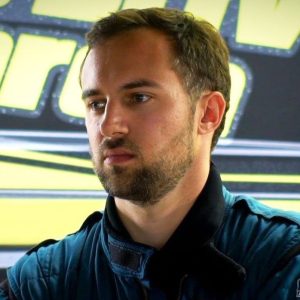

The study was triggered by the Coyote V8 in James Courtney’s Blanchard Racing Team Mustang suffering a crankshaft failure during the recent Townsville 500.
That followed reports of cracks being observed on other higher mileage engines and is of particular concern ahead of the Bend 500 and Bathurst 1000 endurance races.
Ford and MPT made a hurried change of crankshaft supplier ahead of last year’s Great Race following a series of failures at the Sandown 500 lead-up event and subsequent ride day.
In that case the failures were blamed on supply quality of the cranks and a series of replacements taken from Ford’s GT3 program were hand-carried across the globe.
“We’re investigating the failure that happened at Townsville for James Courtney,” Ford Performance’s Australian motorsport program manager Brendan McGinniskin told Speedcafe.
“It’s clearly concerning that there’s been a failure but we’re not jumping to try and change crankshafts or anything wild like that just at the moment.
“We’ve got a lot of balls up in the air as far as the investigation goes and we want to make sure we go through it thoroughly from our side.
“Obviously, we’re not the only ones who are having issues with engines and engine durability, so clearly there could be some greater vehicle level concerns that also need to be looked at.”
View this post on Instagram
That is a clear pointer to suggestions that vibrations in the Gen3 cars could be a factor in creating reliability issues for both the Ford and GM engines.
“Clearly there are both issues on both sides of the brand divide at the moment that we are trying to throw band-aids on when we might be dealing with a platform issue,” he said.
“But we’re working as hard as we can to try and understand all those sorts of things and then where we go to from there.”
McGinniskin confirmed Ford Performance and the Dick Johnson Racing-owned MPT are tackling the investigation, with no involvement from the Blue Oval’s 2026 engine supplier Triple Eight.
While it is taking place with urgency given the Bathurst 1000 is just two months away, McGinniskin said it must be done thoroughly to avoid a wrong move.
“We’re working as hard as we can to get as much information together as possible as quickly as we possibly can,” he added.
“If that requires crack testing cranks, as an example, that’s a bit more of an arduous process depending on what engines we’re needing to recall and from where.
“But by and large we’re just going through everything on the engine side to make sure there’s not something that’s changed since we went through this exercise last time.”
McGinniskin said more frequent servicing of the harmonic balancer on each engine is an interim solution being explored.
The Ford moved to a smaller balancer as part of a raft of changes aimed at improving the engine’s Moment of Inertia ahead of the 2024 season.
Ford’s testing pre-Bathurst last year left it convinced the balancer was not the cause of the crankshaft issues.
However, there have been reports the balancers are wearing at an abnormally high rate, which in turn can impact crankshaft life.
“We’re in discussions with our teams, led by MPT, to make sure we’re not inconveniencing those guys too much,” he said.
“We’re trying to put an interim solution in that will revolve around more frequent servicing of the balancer, but we’re not definitely down that path too far just yet.
“There’s a lot of factors when it comes to what’s actually going on, so we want to make sure we action the right one, because any additional work clearly drives a lot of churn and hours.”
Engine failure on Cam Waters’ Tickford Racing Mustang during a ride day on the Monday following the 2025 Sydney 500 was due to a harmonic balancer issue.
Ryan Wood’s Walkinshaw Andretti United Mustang also suffered an engine failure at Hidden Valley in June, which was said to be the result of a water pump parting company.

























Discussion about this post