
• Login
  • Register
Speedcafe.com
  • HOME
  • NEWS
  • PODS
  • PHOTOS
  • RESULTS
  • NETWORK 100
No Result
View All Result
  • SUPERCARS
  • F1
  • MOTOGP
  • NASCAR
  • INDYCAR
  • GT & ENDURANCE
  • KARTING
  • RALLY
  • SPEEDWAY
  • JOBS
  • HOME
  • NEWS
  • PODS
  • PHOTOS
  • RESULTS
  • NETWORK 100
No Result
View All Result
  • Feed
  • Calendar
  • Results
  • Photos
  • Podcasts
  • Shop
Speedcafe.com
  • Supercars
  • F1
  • NASCAR
  • IndyCar
  • GT & Endurance
  • Karting
  • Bikes
  • Rally
  • Speedway
Home F1

What is DRS? F1 drag reduction system explained

Formula 1 employs a system termed DRS to help improve the racing, but what is it, and how does it work?

Mat Coch
Mat Coch
27 Apr 2025
Mat Coch
//
27 Apr 2025
// F1
A A
0
What is DRS? F1 drag reduction system explained
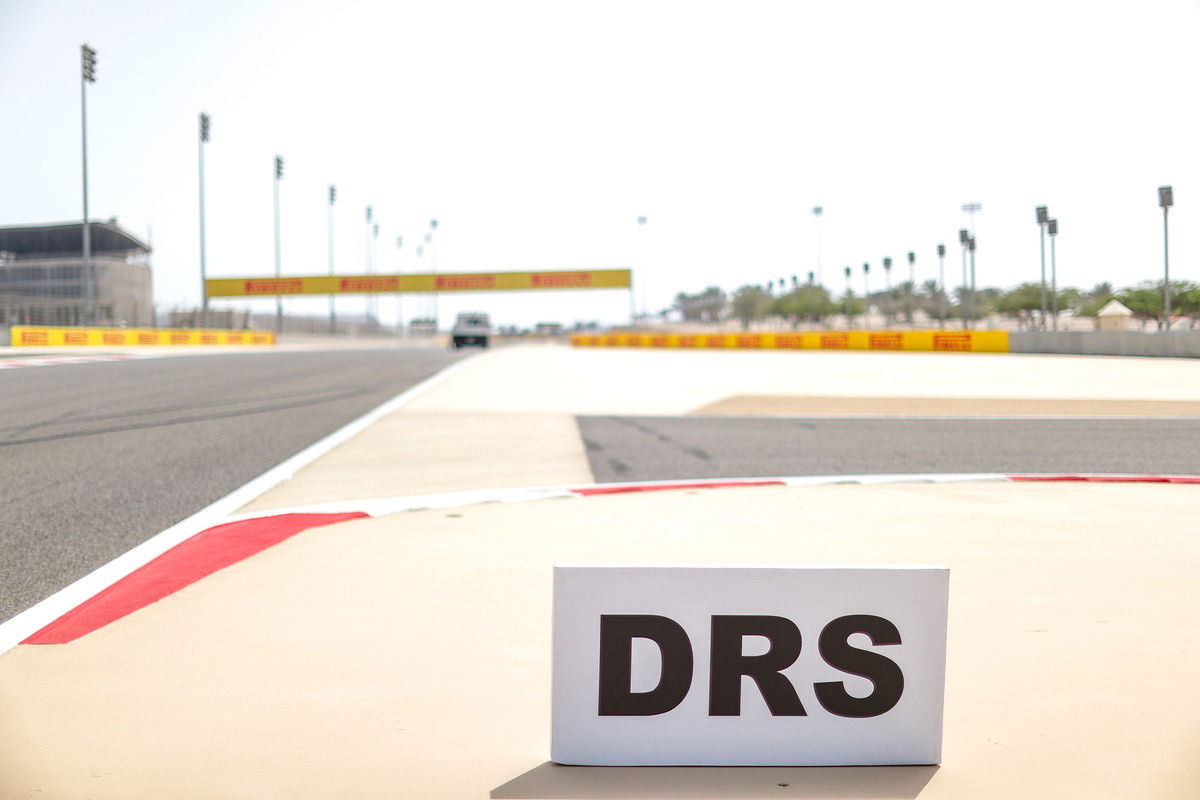
The Drag Reduction System, or DRS for short, is designed to offer a chasing car a temporary speed boost to aid overtaking. Image: XPB Images.

The Drag Reduction System, or DRS for short, is designed to offer a chasing car a temporary speed boost to aid overtaking.

When was DRS first introduced into F1?

First introduced in 2011, the device proved controversial with purists viewing it as an artificial means of creating excitement.

Others saw it as a pragmatic response to a far more complicated aerodynamic issue that prevented cars from getting close enough to pass.

When are drivers allowed to use DRS?

During a race, a driver following within a second of a car in front at specific points of the circuit are entitled to activate their DRS in pre-defined zones.

These zones vary from circuit to circuit based on the specific layout, though by and large utilise long straights into braking zones.

Advertisements

A timing loop is dug into the circuit to establish each car’s relative position and, whether it is within a second of the car ahead.

The system does not prejudice whether it is a battle for position or a leader coming up to lap a backmarker; if the second car is within a second of the car ahead at that point on the track, it is entitled to use the system.

As they enter a DRS zone, the driver receives an audible prompt, at which point they press a button (or pull a trigger, depending on which team they drive for) to activate the system.

How does DRS work?

When the driver activates the system via the steering wheel (it must be manually triggered), the ‘DRS flap’ – the uppermost section of the rear wing – opens much like a letterbox in the front door.

The concept is that, with the flap open, it creates an 85mm slot in the rear wing, reducing drag and boosting top speed by as much as 15km/h.

When coupled with the slipstream effect from the car in front, the concept is designed to create an overtaking opportunity.
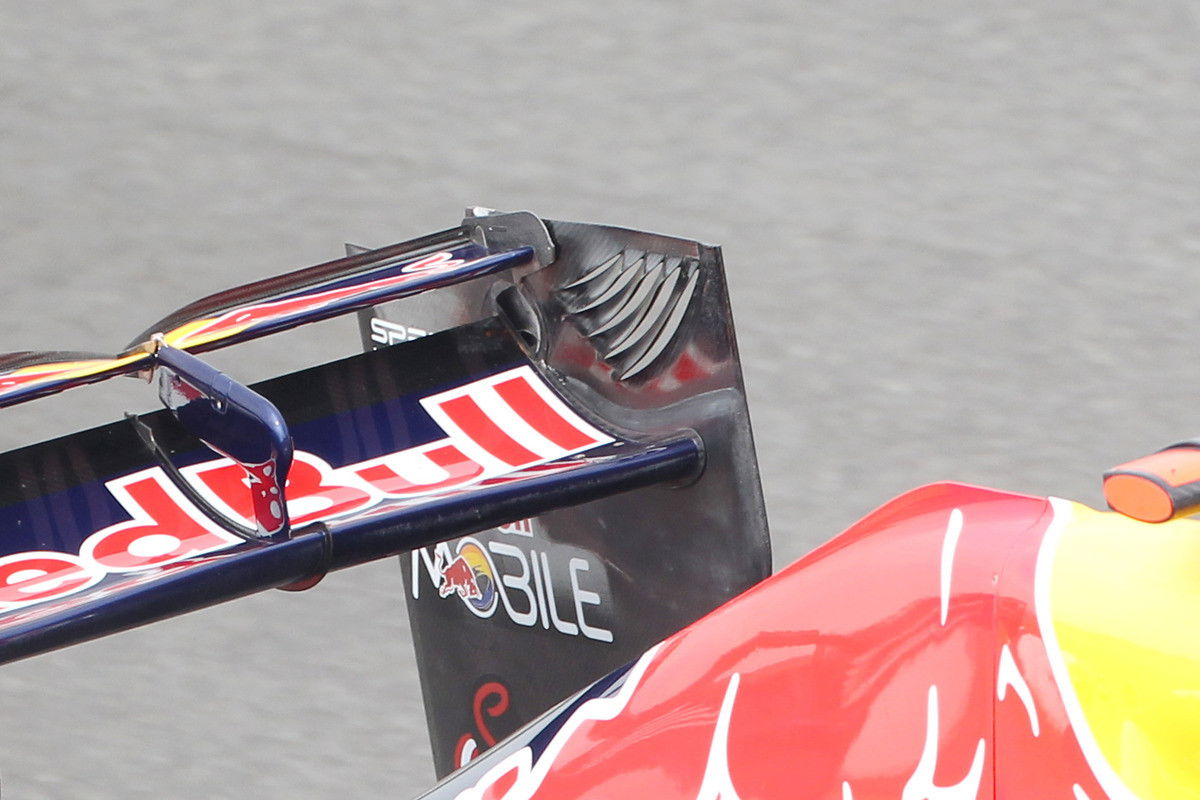
The DRS flap opened on Red Bull's rear wing. Image: XPB Images.

The DRS flap opened on Red Bull’s rear wing. Image: XPB Images.

What is a DRS Detection Point?

On each circuit, defined timing loops embedded in the track surface are marked out as ‘Detection Points’.

These are located shortly before the defined ‘DRS Zone’ and are the point on track where the relative position of the cars is measured.

As a driver crosses that line on the track, if they are within one second of the car ahead, they will be entitled to use DRS when they reach the DRS Zone.

There may be multiple detection points on any given circuit and, for the most part are linked only to the DRS Zone that immediately follows.

However, at some circuits, there may be a single DRS Detection Point for multiple DRS Zones.

What is a DRS Zone?

A DRS Zone is a defined area within which a driver is allowed to open their rear wing, provided they were within a second of the car ahead at the DRS Detection Point immediately before the zone (for the most part).

These zones are typically placed on straights with their distance calculated such that the pursuing car has a chance to attack.

The number of DRS Zones is circuit-specific, with Suzuka boasting only one while Albert Park, for example, has four.
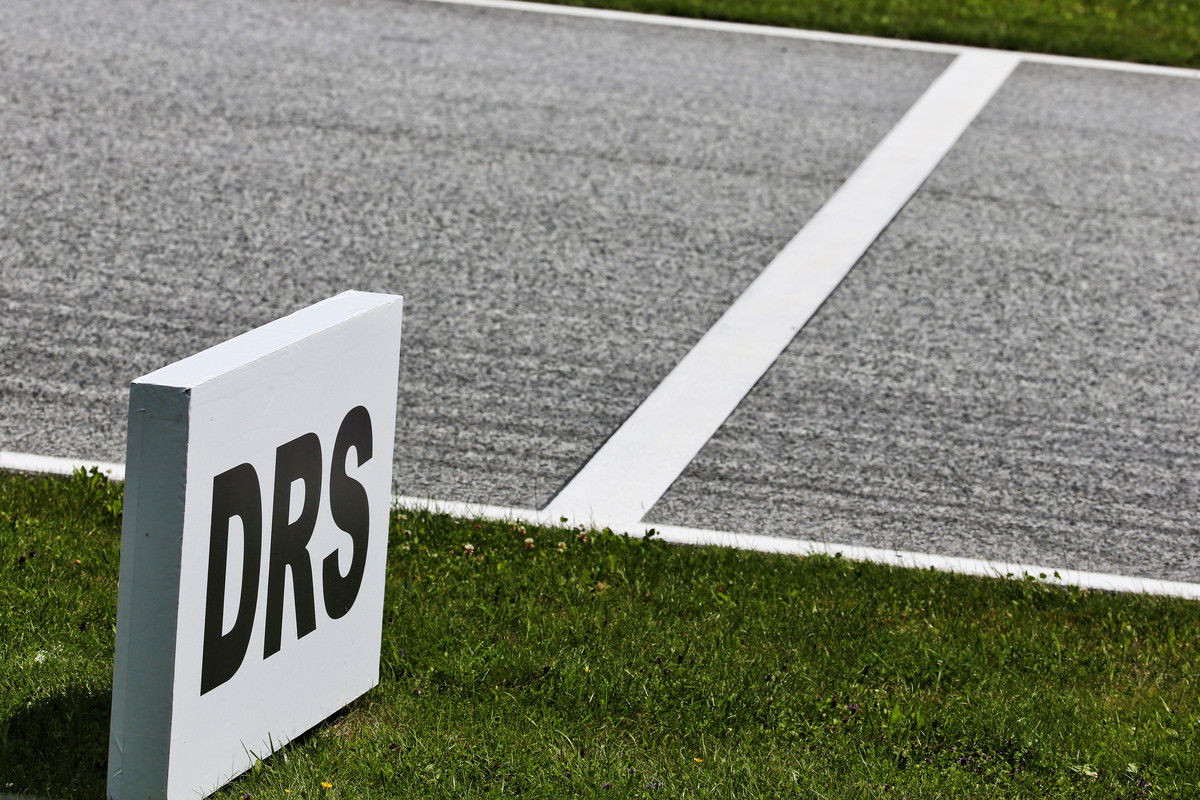
The start of a DRS Zone. Image: XPB Images.

The start of a DRS Zone. Image: XPB Images.

Are there any limitations on DRS?

There are a number of limitations to the system.

It is not available on the opening lap of the race, for obvious reasons, and it’s also disabled in wet conditions on safety grounds.

The same is true when the Virtual Safety Car or Safety Car are on track, and it is also disabled should there be a yellow flag.

What are the risks involved with DRS?

For the most part, DRS is a safe system with an engineered dead-man system such that, if it fails, it should close itself.

However, over the years, several individual incidents have highlighted weaknesses in it.

The aerodynamic influence of DRS is to shift the centre of balance forward quite considerably, leading to an unstable car in corners.

Typically, this isn’t an issue as the system is used either on straights or where the importance of aerodynamic grip is extremely low.

DRS zones also tend to feed into braking zones, with the flag snapping shut when the brake is applied.

However, there are a handful of instances on the calendar where there is no clear braking zone at the end of the zone, forcing drivers to manually close the wing.
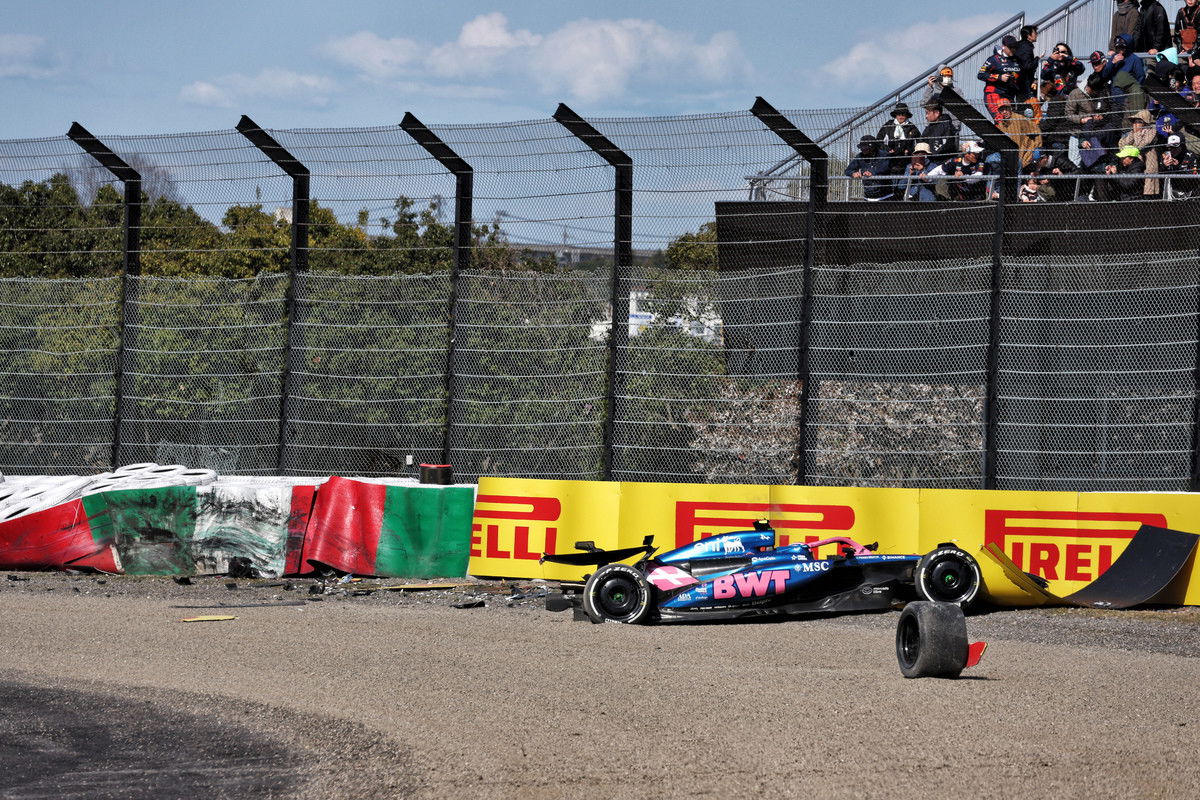
Jack Doohan crashed at Suzuka after he failed to close his DRS flag as he entered Turn 1. Image: XPB Images.

Jack Doohan crashed at Suzuka after he failed to close his DRS flag as he entered Turn 1. Image: XPB Images.

Jack Doohan fell afoul of that at the Japanese Grand Prix this year, spinning at near full speed off the road and impacting the barrier heavily.

The system also relies on the car being detected by the timing loops in the track.

While it is exceptionally rare for that system to fail, it has done so – George Russell’s Mercedes suffered a timing fault during the Bahrain Grand Prix.

In response, a driver can manually override the system in three different ways.

The simplest is by applying the brakes, which will see the DRS flag snap shut.

Conversely, drivers can lift off the throttle by a predetermined percentage, though it differs from team to team and often from track to track. The typical figure is around 20 percent.

The final method is by activating the control on the steering wheel once more.

Does DRS help racing?

By and large, the system has helped improve the on-track show and led to an increase in overtaking.

However, it’s hardly black and white as the nuances of the system can lead to it being underpowered as easily as it can be overpowered.

Each DRS zone is calculated to give the chasing driver an opportunity to attack—it’s not designed to allow them to simply breeze by.

However, that has occasionally happened, creating situations where the car being attacked is simply defenceless.

The reverse is also true, where the DRS zone has not been long enough and even with that advantage, the pursuer is unable to get close enough to mount a serious challenge.

What is the future of DRS?

From 2026, DRS will no longer be relevant as F1 moves towards regulations that employ movable aerodynamic devices by default.

As such, there would be no advantage in changing the rear wing to reduce drag.

Instead, F1 will introduce ‘X-Mode’, effectively a push-to-pass system using the hybrid engine’s electrical energy.
Discussion about this post

[postcode_search_form]

Latest from Torquecafe

We try Australia’s latest automotive success story

18 April 2026

Iconic brand brings back a manual, turbocharged hatchback

17 April 2026

Latest Podcasts

PODCAST: Christchurch Super440 – Friday

17 April 2026

PODCAST: First impressions of new Supercars track + parity latest

16 April 2026

Related Articles

Stefano Domenicali walking in the F1 paddock

Stefano Domenicali outlines path for F1 rule tweaks

F1
22 hours ago
F1
0
Liam Lawson smiling in front of the F1 logo at the Japanese Grand Prix

Racing Bulls wants Liam Lawson to ‘eliminate’ one thing

F1
2 days ago
F1
0
ADVERTISEMENT

Platinum Partners

Latest & Trending News

Scott McLaughlin crashed during IndyCar practice at the Grand Prix of Long Beach.

‘I blame you’: Commentator’s curse spells McLaughlin’s end

IndyCar
18 April 2026
IndyCar
0
Chaz Mostert during the ITM Christchurch Super440.

Mobil 1 Live Updates: Supercars Christchurch Super440

Live Updates
18 April 2026
Live Updates
0
Harry Bates and Coral Taylor during Rally Queensland in 2025.

LIVE: Australian Rally Championship, Rally Queensland

Rally
18 April 2026
Rally
0
Ryan Wood during the ITM Christchurch Super440 at Ruapuna. Image: InSyde Media

Wood leads Payne for all-Kiwi front row at Christchurch

Supercars
18 April 2026
Supercars
0
Brodie Kostecki during the ITM Christchurch Super440.

Kostecki clinches Christchurch Race 2 pole as Cameron stars

Supercars
18 April 2026
Supercars
0
Ryan Wood during the ITM Christchurch Super440 at Ruapuna.

Wood edges ahead in race for Jason Richards Trophy

Supercars
18 April 2026
Supercars
0

Supercheap Auto

Pirtek Poll

POLL: Can Toyota win the Supercars Championship?

Vote View Results Past polls
Pirtek Poll
View past polls
2026 Supercars Championship WINS POLES PTS
1
Brodie Kostecki
Shell V-Power Racing Team
17 4 2 731
2
Broc Feeney
Red Bull Ampol Racing
88 3 2 676
3
Matthew Payne
Penrite Racing
19 0 1 631
4
Ryan Wood
Mobil1 Truck Assist Racing
2 1 1 596
5
Cam Waters
Monster Castrol Racing
6 0 0 593
2026 Formula 1 Championship WINS POLES PTS
1
Kimi Antonelli
Mercedes
12 2 2 72
2
George Russell
Mercedes
63 1 1 63
3
Charles Leclerc
Ferrari
16 0 0 49
4
Lewis Hamilton
Ferrari
44 0 0 41
5
Lando Norris
McLaren
1 0 0 25
ADVERTISEMENT
[instagram-feed feed=2]
Support the partners that support Speedcafe
Truck Assist R & J Batteries Mobil 1 Supercheap Auto Michelin
Meguiars Coates KTM ACDelco
AASA PPQ Authentic Collectables Nueva Fastly
Green and white "speedcafe." logo on a black background, conveying a racing theme.
Speedcafe.com has been established to provide a daily motorsport news service to the industry and fans in Australia and internationally.
Follow Us

Categories

SUPERCARS

F1

NASCAR

INDYCAR

GT

MOTOGP

PHOTOS

TV

PODS

Platinum Partners

TRUCK ASSIST
R&J BATTERIES
MOBIL1
SUPERCHEAP AUTO

MICHELIN
MEGUIARS

COATES

ACDELCO

Newsletter

Subscribe to our daily newsletter, the best way to get your news first, fast and free!

Thank you!

You have successfully joined our subscriber list.

Your daily racing fix - Newsletter

Subscribe to our daily and breaking newsletter for all the latest news delivered direct to your box

SUBSCRIBE
Follow Us

Categories

SUPERCARS

F1

NASCAR

INDYCAR

GT

MOTOGP

PHOTOS

TV

PODS

Platinum Partners

TRUCK ASSIST
R&J BATTERIES
PIRTEK
MOBIL1
SUPERCHEAP AUTO

PARCEL PROTECT

MICHELIN
MEGUIARS

COATES
FORD

XPEL

ACDELCO

Green and white "speedcafe." logo on a black background, conveying a racing theme.

Copyright © 2026 Speedcafe.com. This site is protected by reCAPTCHA. The Google Privacy Policy and Terms of Service apply.

Our Team /  Advertise with us / Comments Policy / Privacy Policy /

No Result
View All Result
  • News
  • Calendar
  • Results
  • Event guides
  • Podcasts
  • Shop
  • Photos
  • Videos
  • Contact Us
  • Advertise
  • Network 100

Copyright © 2025 Speedcafe.com This site is protected by reCAPTCHA. The Google Privacy Policy and Terms of Service apply.

Welcome Back!

Login to your account below

Forgotten Password? Sign Up

Create New Account!

Fill the forms below to register

All fields are required. Log In

Retrieve your password

Please enter your username or email address to reset your password.

Log In

Add New Playlist

No Result
View All Result
  • News
  • Calendar
  • Results
  • Event guides
  • Podcasts
  • Shop
  • Photos
  • Videos
  • Contact Us
  • Advertise
  • Network 100

Copyright © 2025 Speedcafe.com This site is protected by reCAPTCHA. The Google Privacy Policy and Terms of Service apply.

Sign Up For Our Newsletter

Subscribe to our mailing list to receives daily updates direct to your inbox!

[mailpoet_form id=”28″]