
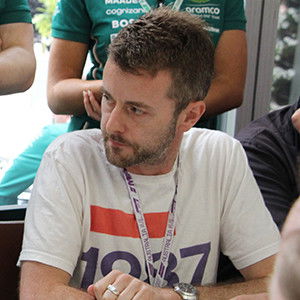

A Paris court has ruled that a full trial is required to examine allegations of irregularities raised by former presidential candidate Laura Villars, who launched a legal challenge in October after being unable to enter the race.
The court declined to suspend the 12 December vote, meaning incumbent Mohammed Ben Sulayem will stand unopposed in Tashkent, Uzbekistan, where he is expected to secure a second four-year term.
Villars, along with fellow hopefuls Tim Mayer and Virginie Philippot, was forced to withdraw after discovering only one eligible vice-presidential candidate existed for the South American region.
Under FIA rules, each presidential contender must present a slate of seven vice-presidents, one from each global region. With Brazilian Fabiana Ecclestone already committed to Ben Sulayem’s ticket, no alternative candidate could legally assemble a complete list.
In her complaint, Villars argued that the situation created “the impossibility of presenting an alternate bid” and an “unprecedented situation of having one single eligible candidate for the South American region.”
She also questioned the “transparency and methods” of the nominating committee and the broader “compliance of the electoral procedures with the governance, democracy and integrity principles which the FIA advocates for.”
A first emergency hearing was held last month, but Judge Malik Chapuis determined that the case was too complex to rule on immediately.
Instead, the court confirmed that the issues raised “must be examined” at a full trial. Villars’ lawyer, Robin Binsard, said: “We will therefore continue this litigation against the FIA before the judges sitting on the merits. A first hearing is scheduled for 16 February 2026.”
The court also rejected the FIA’s argument that neither Villars nor Mayer had standing to bring the case.
Mayer’s FIA Forward group welcomed the ruling, calling it a “reasonable and expected response” given the limited evidence that could be presented at the emergency stage.
In a wider critique of the election framework, FIA Forward said Mayer has long argued that “the lack of transparency, accountability, and the excessive concentration of presidential authority” undermines the ability of member clubs to assess competing visions for the FIA’s future.
While the election will proceed, the court made no endorsement of its validity. Villars’ press release noted that the election’s “validity, in light of the objections raised, may be reviewed, challenged, or annulled” following the February hearing, with the legality of Ben Sulayem’s second term potentially at stake.
In a statement, the FIA confirmed the election would go ahead on 12 December and said it “remains focused on the forthcoming General Assemblies and discussing with its member clubs globally important issues for both motorsport and automotive mobility.”



























Discussion about this post